Understanding RO3003 Laminates
In the rapidly evolving landscape of PCB manufacturing, understanding different materials is crucial for engineers and designers seeking optimal performance in their applications. Among these materials, RO3003 laminated composites from Rogers Corporation stand out due to their unique attributes suitable for high-frequency and microwave applications.
What is RO3003 PCB Material?
RO3003 PCB material is a ceramic-filled PTFE laminate specifically designed for high-frequency applications. This material exhibits low dielectric loss and a stable dielectric constant, making it a preferred choice for RF circuits and microwave systems. Its formulation allows it to meet the demanding specifications in various industries, including telecommunications, automotive radar, and aerospace.
Key Properties of RO3003 Laminates
- Dielectric Constant: RO3003 has a dielectric constant (Dk) typically around 3.0, which provides minimal signal attenuation.
- Thermal Stability: The laminates can withstand high temperatures without deforming, allowing them to be used in a variety of environments.
- Low Moisture Absorption: This property ensures that the performance remains stable in humid conditions.
- Ease of Machinability: RO3003 can be processed using standard PCB fabrication techniques, leading to cost-effective manufacturing.
Applications of RO3003 in Industry
RO3003 PCBs find their applications in several key areas:
- Telecommunications: Used in antennas and other RF components, where reliability and performance are paramount.
- Aerospace: Ideal for high-frequency signal transmission in avionics systems.
- Automotive: Employed in advanced driver-assistance systems (ADAS), including radar and lidar technologies.
Challenges in RO3003 PCB Manufacturing
While RO3003 offers significant advantages, manufacturers face several challenges during the production process. Recognizing these obstacles allows for better planning and execution in PCB fabrication.
Common Manufacturing Obstacles
- Delamination: High processing temperatures can cause layers to separate if not managed properly.
- Surface Roughness: Achieving the required surface quality for effective soldering can be a hurdle.
- Tooling Wear: The abrasiveness of the material can lead to faster wear on cutting tools.
Best Practices to Overcome Challenges
To combat these challenges, manufacturers should employ several best practices:
- Controlled Environment: Maintain humidity and temperature levels during manufacturing to prevent moisture-related issues.
- Advanced Tooling: Use specialized tools designed to handle PTFE laminates to reduce wear.
- Process Optimization: Regularly evaluate and refine manufacturing processes to mitigate the risk of defects.
Technical Considerations for Engineers
Engineers need to be aware of the specific technical requirements when designing with RO3003. For example, understanding the thermal expansion properties and the implications for multilayer circuit design is critical to ensuring reliability.
Design Considerations for RO3003 PCBs
Proper design is fundamental for realizing the full potential of RO3003 materials in various applications. The following considerations are imperative for effective PCB layouts.
Essential Design Elements for Effective PCB Layouts
- Trace Width and Spacing: Calculating the correct dimensions is vital to maintaining signal integrity.
- Layer Stackup: A well-thought-out stackup will optimize the performance of the PCB in high-frequency applications.
- Ground Planes: Efficient grounding can minimize electromagnetic interference (EMI).
Design for Manufacturing (DFM) Techniques
Incorporating DFM techniques early in the design process can significantly enhance manufacturability:
- Clear Documentation: Provide precise specifications to the manufacturing team.
- Prototyping: Create prototypes to identify potential issues before full-scale production.
- Feedback Loops: Establish constant communication between design and manufacturing teams to streamline processes.
Simulating Performance with Software Tools
Utilizing simulation software can help anticipate design flaws and ensure that the PCB meets the required performance standards before manufacturing. Tools such as HFSS and CST can offer insights into electromagnetic performance.
Manufacturing Process for RO3003 PCBs
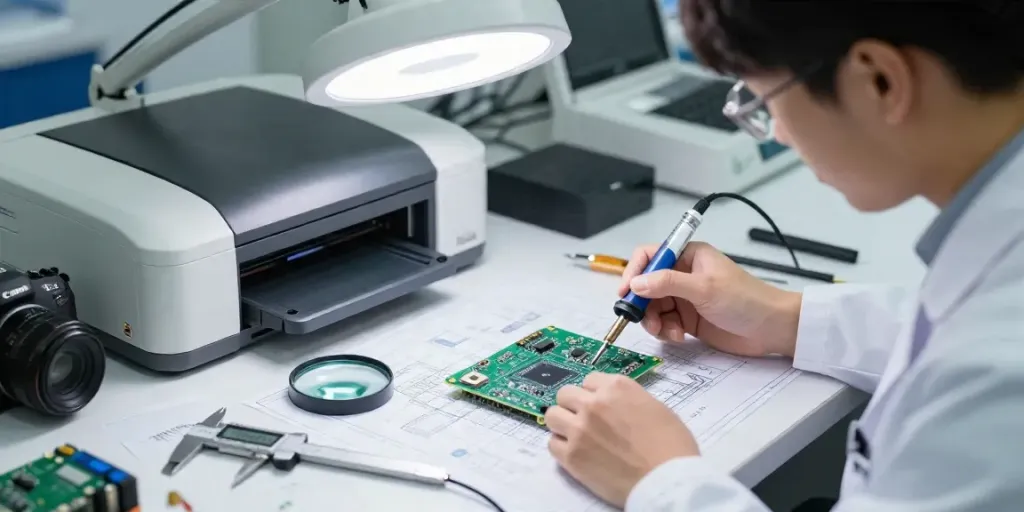
Understanding the manufacturing process is essential for anyone involved in PCB fabrication. Below is a step-by-step guide highlighting key stages involved in RO3003 PCB manufacturing.
Step-by-Step Guide to PCB Fabrication
- Material Preparation: Start with high-quality RO3003 laminate sheets.
- Imaging: Use photolithography to transfer the PCB design onto the laminate.
- Etching: Remove unwanted copper to form the desired circuit patterns.
- Layer Bonding: In multilayer designs, bond layers using appropriate techniques to ensure durability.
- Drilling: Create vias and holes as per design specifications.
- Finishing: Apply surface finish to enhance solderability and protect against environmental factors.
Quality Control Measures in Production
Quality assurance is paramount in PCB manufacturing. Regular inspections and testing, including electrical tests and visual checks, are vital to ensure the integrity of RO3003 PCBs. Effective quality control helps identify defects early in the production cycle, thereby minimizing waste and improving overall product reliability.
Future Trends in RO3003 PCB Techniques
The landscape of PCB manufacturing continues to evolve, with trends such as the integration of automation and AI in production expected to significantly enhance efficiency, reduce costs, and improve quality. As technology advances, it is critical for manufacturers to adapt and innovate in their processes for RO3003 PCB manufacturing.
Emerging Innovations in PCB Technology
The field of PCB technology is continuously advancing, with exciting innovations that could reshape manufacturing practices and performance outcomes.
Advancements in Material Science
New material developments are emerging to complement existing laminates like RO3003. Exploring hybrid materials that merge the benefits of ceramic and PTFE could lead to even greater performance enhancements for RF applications.
Impact of Automation on PCB Manufacturing
Automation plays a crucial role in modern PCB manufacturing, streamlining processes and reducing human error. Automated systems can monitor and optimize production parameters in real-time, ultimately leading to higher quality products while minimizing costs.
Future Outlook for RO3003 Applications
As the demand for high-frequency applications grows, the use of RO3003 laminates is expected to expand across various sectors. Businesses involved in RF communications, automotive, and IoT products will benefit from the advancements in RO3003 technology.
What are the key benefits of RO3003 materials?
RO3003 materials provide numerous advantages, including excellent thermal stability, low dielectric loss, and the ability to be processed using standard PCB techniques, making them versatile for high-frequency applications.
How does RO3003 compare to other PCB materials?
Compared to other materials like FR-4, RO3003 offers superior performance at high frequencies due to its stable dielectric properties and lower loss characteristics, making it a go-to choice for RF applications.
What industries benefit most from RO3003 PCBs?
Industries such as telecommunications, aerospace, and automotive radar greatly benefit from RO3003 PCBs, leveraging their ability to operate reliably under demanding conditions.
What are the typical costs associated with RO3003 manufacturing?
While RO3003 materials may be more expensive than traditional laminates, the long-term benefits, including performance reliability and lower signal loss, typically justify the investment.
How can I improve the reliability of RO3003 PCBs?
Engineers can enhance reliability by ensuring robust design, implementing thorough quality control measures throughout the manufacturing process, and utilizing advanced simulation tools to optimize performance.
For those interested in further insights on RO3003 PCB manufacturing, leveraging these techniques and understanding the material's unique properties is essential for successful applications.